
Hillsboro
Inside A Party in Your Name
 Spotify
 Apple Podcasts
 YouTube
 iHeart
 Pocket Casts
 Overcast
 RSS
RSS
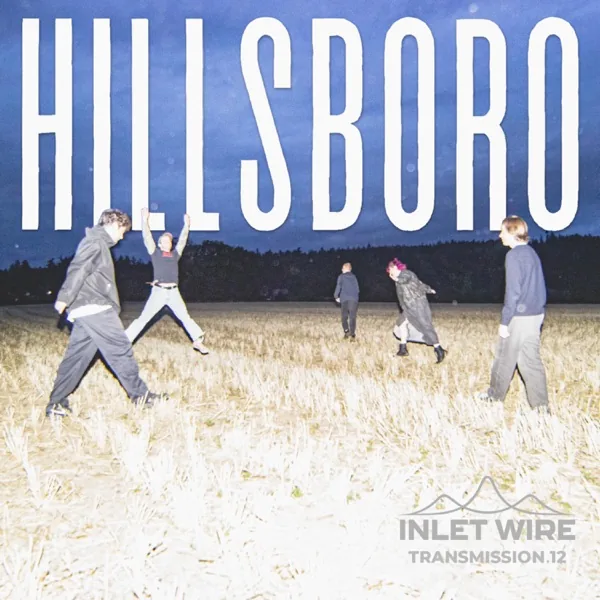
This Inlet Wire episode with Nima from Hillsboro gets into a band that seems to be seeing itself more clearly.
I first came across Hillsboro at SOMA Fest 2026 at Red Gate Arts Society. I was there to catch Blush from Victoria, and their drummer Eric told me I should stay for Hillsboro too. Glad I did. That set was my first real entry point into Hillsboro, and this conversation gave me a chance to dig further into what first caught my attention that night.
A lot of this episode circles around change. Nima talks about how some things around the band feel completely different, while other parts have stayed strangely the same. There is a good thread here about getting older, knowing what they want more clearly, and not feeling the same need to force every idea into one perfect statement.
That shift also comes through in how the band is working now. Instead of building everything around a computer from start to finish, there is more focus on what happens when the group is actually in a room together. That gives the episode another layer, because it is not just about new songs. It is also about what Hillsboro seems to value more now in being a band.
The conversation also gets into their first time working with producer Colin Stewart, and that adds something too. Nima talks about that experience in a way that feels open and practical. Less about handing over control, more about finding someone who understands what the band is trying to do and helping push it further.
You also get a clearer sense of where the new material is headed sonically. Louder where it needs to be, more direct, and more willing to lean into contrast instead of smoothing everything out.
So if you want to hear a band talk through how its process, sound, and priorities are shifting over time, this episode gives you that. It is a good one to hear if you want a better sense of where Hillsboro is at right now.
Transcript
This transcript has been lightly edited from the original recording for readability. Speaker labels and brief audio notes have been added for accessibility.
Transcript
Cold open
Nima: I’ve been thinking about our music recently as the five stages of grief. If the first album is denial, and then the white trashy EP is anger, then this one’s bargaining.
[Music excerpt from Hillsboro plays.]
Main episode
Eric Chan: I’m Eric Chan, and you are listening to Inlet Wire, your direct line to BC artists. In this episode, I’ve got Nima from the band Hillsboro.
This band has changed a lot since the first release, and with the newer material, it sounds like they are pushing into a different chapter.
Nima: In my head, we’re almost like a new band just because of how much has changed with this new stuff we’re putting out. But at the same time, it’s kind of been the same friend group for like six years.
Eric Chan: That shift is not just in the songs. It’s in how they think about the band now too.
Nima: Well, some things have changed a lot, and some things I’m surprised how little they’ve changed. The thing that’s probably changed the most is just that we know what we want more now, I think. We’re more focused about what we’re interested in pursuing.
I think when we first started, it was kind of like we felt like all our ideas needed to come out at once, and we needed to make this perfect thing that was this big amalgamation of all our influences, and everything we wanted to do. Everything we wanted out of music and life.
And now, I think, I don’t know if it’s just getting older, but we’re more interested in just getting a feeling. It doesn’t need to be polished, or it doesn’t necessarily need to be this intellectualized thing. I think we’re more just about enjoying it and trying to make stuff that we really like, and spend as much of our time as possible doing that together.
Eric Chan: And once that changed, the process started changing with it.
Nima: The way we sort of work, to some extent, is I will come up with a minute, minute and a half of music, whether that’s a demo or something, or I’ll do that with one of the other guys. I’ll sit everyone down and go on my laptop and play them stuff and just see which ones they respond to. Then, if there’s ones that we are all excited about, we’ll go in the rehearsal space and play them together and kind of flesh them out.
Whereas before, we would start to finish things on my laptop. We would just sit around a computer and take turns playing stuff. Then we played a lot of shows, and now it feels like if you’re in a band, the cool part of that is you can play with other people, so you should use that. Showcase the fact that you’re a bunch of people in a room who can play music. That feels cool now to me more than before.
Eric Chan: That also opened the door to a different way of recording.
Nima: We started working with this producer, Colin Stewart. It was our first time going into a studio and working with a producer. It’s honestly been a really great experience because it feels like he has a really good vibe.
Before, I was super against that. I felt like everything needed to be me and Oliver. But now with Colin, he just really gets what we’re doing and the things I’m going for. We just send albums and memes to each other all the time. Then we go to his place, and he’s been doing this for like 40 years as his full-time job.
There used to be things where me and Oliver would be like, “Oh, we want this, but we didn’t know how to make it.” Whereas with Colin, I’ll just be hanging out, pacing around behind him, being like, “Make it sound like this,” and then he does it. So that has been really fun, just that experience, basically.
Eric Chan: From there, the newer material started taking on its own shape.
Nima: It was just a bunch of stuff that we were playing live, to be honest. We sort of figured out the whole thing at shows. Pretty much all the songs, you would have this initial demo, I would bring it to them, and we’d play it.
At the time, we were playing two to three shows a month at least, just playing in Victoria and Vancouver over and over and over. So we started using that as a testing ground for new songs. I wouldn’t even have lyrics sometimes. I would just kind of be mumbling into the mic, just nonsense, and then seeing what worked, and collecting stuff over a few years of playing these different shows and listening to different things. We spent like a year just kind of slowly working on it in the studio.
[Music excerpt from Hillsboro plays.]
Eric Chan: And once Nima starts describing it, you can hear how far they’ve pushed it.
Nima: I’ve been thinking about our music recently as the five stages of grief. If the first album is denial, and then the white trashy piece is anger, then this one’s bargaining. It kind of is about trying to improve and become a more full person, but also still kind of being stuck in your old ways.
That transition, and the feelings that you have in that transition, is sort of the theme I was dealing with. Yeah, it’s exciting. It’s the most proud I’ve ever been of something I’ve made.
Eric Chan: And if you’re coming to Hillsboro for the first time, Nima already has a starting point for you.
Nima: I think out of the released songs, people should listen to “Woah.” Yeah, I think that’s probably the one people should check out. If they just want an overview of how it’s like, okay, it’s going to be really loud, but kind of pretty. Yeah, it gets the vibe, I think.
[Music excerpt from “Woah” by Hillsboro plays.]
Nima: That one started as just another demo on my laptop. I still use an old computer from 2016 with FL Studio on it to do all my demos. So I made it on there, then I went over to Oliver’s house and was kind of playing him stuff, and he was like, “Oh, this is cool.”
It wasn’t much there. It was just the drum beat and the big chord. So I just had the drum beat and the big chord and the weird wobbly bass line thing. We worked on it a bit, but then I kind of shelved it for a year after that and was on to other stuff.
And then I had a really bad breakup.
[Laughs.]
We had just sort of started singing random melodies on it. But then, this is kind of how I do all my lyrics these days. I will just sit down at midnight and stay up till four in the morning and go back and forth between playing guitar or piano for a few minutes, and then going and watching a movie or doing something else to cleanse my palate, and then come back and write for five minutes.
I think I was just at the studio overnight and pulled an all-nighter and just figured out what I wanted to say. In terms of what it’s about, I was really, really depressed for two years, and that’s sort of what the lyrics are about, I guess. Just what I was going through. That’s one of the songs I probably didn’t think about as much. It just sort of fell out.
Eric Chan: That’s it for this episode with Nima from Hillsboro. I’m Eric Chan, and this is Inlet Wire, your direct line to BC artists.
[Air whoosh.]
Transcript note
This page is meant to make the spoken content of the episode easier to access and read. Brief audio notes are included where they help with understanding.
 Instagram
 Bandcamp


 Facebook
More like this

Posh Coat
Andrew Whitney from Posh Coat joins Inlet Wire to talk about how the band came together, writing songs for the stage, and why feeling always comes first in their recordings.

Blush
Blush started as four friends making music together in Victoria, BC, and over time that natural beginning grew into a band with its own shape and sound.

Silverware
In this episode of Inlet Wire, Eric Chan talks with Huckleberry from Silverware (Victoria, BC). They get into the early moment that pushed the band forward, how their songs take shape from rough ideas…